Sofia Escobar
Perception is a very strong element that enhances a film because of the immediate response that is generated by past experiences, personal aesthetic, and morals of an individual. By definition, Perception means “A result of perceiving: Observation” according to the Webster Dictionary. This explains why cinema and perception go hand in hand, these concepts would not exist without each other. Every person has their own perception of reality, this of course affects the overall outcome of opinions and controversy of a film. Many historical films display a range of emotions that are very clear and set a guideline for modern day films. Political issues present themselves in many different movies no matter what generation it is. This is because politics have always been connected to social issues and the divination of groups. Inglorious Bastards is a film that shows many different points of view throughout World War II. There’s an extremely realistic portrayal of the attitudes Nazis had against the Jewish people of their communities. This film begins in Nazi occupied France with a father and his three daughters hiding a Jewish family. A Nazi officer comes to their small home in order to interrogate the father because of the report that stated the history of Jewish families that used to live in their home. As the German soldier continues the questioning, he slowly explains the mindset he enters as he searches for Jews that are hidden and threatens the family with arrest if he does not comply. When the officer accesses the information he demands for, he orders the soldiers that accompanied him to assassinate the Jewish family that’s hidden under the floorboards. The daughter, named Shosanna, of the Jewsish family manages to survive the attack and flee. As the movie develops, the audience is introduced to the ‘Inglorious Bastards’ who are eight Jewish Americans that have been militarily trained and have the desire to exterminate as many Nazis in Germany as they can. This expresses humanity in two different lights. One being heavily violent and the other being a peaceful yet risky action. There were many perceptions that were commited to ending the Nazi regime and were willing to risk a lot in order to be allies. While the storyline and goals of the Inglorious Bastards are revealed, Hitler is portrayed as a bitter man that doesn’t tolerate the reality of the circumstances of Germany winning the war. As the plot continues to thicken, Shosanna continues her life as Emmanuelle Mimieux to protect her identity and owns a small cinema in Paris. She is exposed to life as a civilian under German control while carrying on the everlasting horror of the massacre of her family. One day while tending to her theater, a german soldier takes a fascination in her and demands that she rents out the cinema to the leader of the Nazi propaganda. This results in Shosanna formulating a meticulous plan to burn the cinema down whilst the German nationalism night is occuring. This plan coincides with the Jewish American soldiers, who find out about the event and have a source into infiltrating the cinema. Their perceptions collide without even having knowledge of the other’s existence.

“Inglorious Bastards” demonstrations of perception connects to Takaki’s understanding of Jewish oppression during World War II. Throughout “A Different Mirror”, Takaki discusses race and gender in American history and how those two factors played a role in equality. During the Holocaust, Jewish Americans faced many trials and tribulations when deciding how to educate their children and other civillians on the religious discrimination being displayed in Germany. Meanwhile, the United States was still unsure on how to assist the Jewish people because of economic factors, “existing restrictions were needed to keep out immigrants who would take jobs away from American workers” (Takaki, pg. 372). This ongoing conversation opened many perspectives of humanity, ultimately President Roosevelt had already “extended the visas for twelve thousand refugees” (Takaki, pg. 373), he refused to let more Jewish refugees into the country. Although America was known for being an ally, they had faced many setbacks before they allowed twenty thousand children refugees into the country on the terms of them not becoming public charges. One of the main concerns that deterred our country from becoming consistent with helping the Jewish refugees was the racial Quota instilled in our society. These attitudes are displayed in “Inglorious Bastards” when Jewish Americans take matters into their own hands and continue their ramage in Nazi occupied France in order to send a message to the German Nationalism Hitler created. These contrasting perspectives managed to find a common ground, shown through the admittance of the refugees while having to be supported by organizations or individuals.
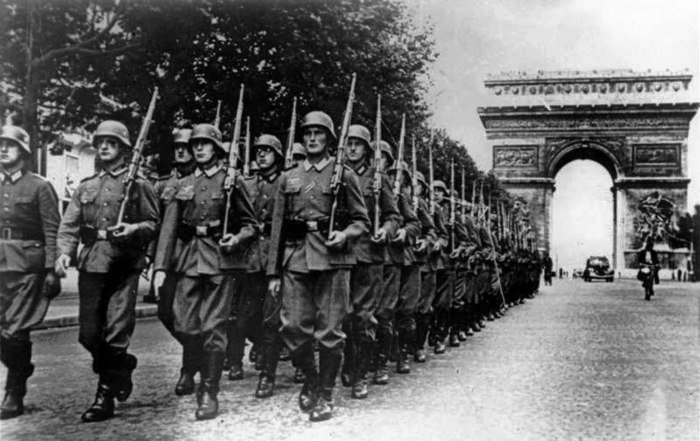
Postman’s “Amusing Ourselves To Death” imposes a different perspective of U.S. history by providing economic viewpoints and religious conflict. America was set on a basis that it would be a country with religious freedom and separation of church and state but was influenced by Christianity during certain time periods. Prior to World War II, President Jefferson was very much non religious and believed that creed was “human inventions, set up to terrify and enslave mankind, and monopolize power and profit” (Postman, pg. 54). This statement caused backlash from churches and the controversy continued through his term. As technology developed in the early nineteen hundreds, the news was beginning to be more published and information about current world issues were being spread. The progression of communication is displayed throughout “Inglorious Bastards” when Nazis and the U.S. army are receiving information. These advances created new economic opportunities across the globe, “influence of the printed word in every arena of public discourse was insistent and powerful not merely because of the quality of the printed matter but because of its monopoly” (Postman, pg. 41). This point of view reflects a less compassionate approach to reporting news and keeping connections. Someone who has a lot of governmental power, may have a more economic comprehension of religion and technological progression.

Occupied France during World War Ii. (n.d.). Retrieved from https://en.wikipedia.org/wiki/Zone_interdite
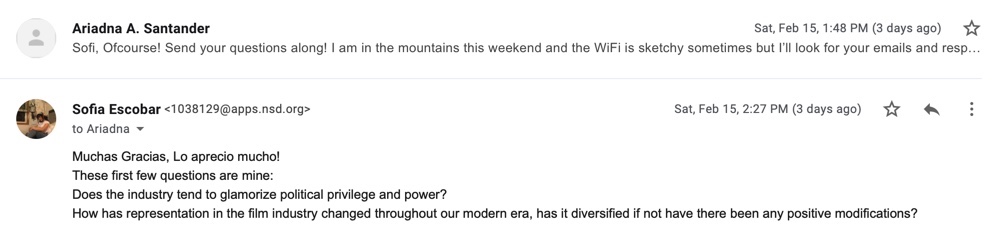
Our community partner was Ariadna Santander, otherwise known as Ari, is a manager at the University of Washington. She mainly studied fine arts and cinema, Sanatander has a highly developed understanding of cultural films and literature. I asked her two questions that would expand my understanding of the film industry and the contribution to cultural and social issues. The questions were “does the industry tend to glamorize political power and privilege?” and “how has representation in the film industry changed throughout the modern area, has it diversified if not have there been any positive modifications?”. She replied with very meaningful responses using perception as a connection to modern cinema. She answered my first question with examples of recent films, “if we are speaking about mainstream cinema, often a reflection of popular culture then maybe… However cinema has the power to tell a story from many different perspectives and it truly depends on the writer, the director and the producers” (Santander). Her answer expanded my perception of the industry and the various factors that play into creating a film of any genre. Santander also brought up many important benefits of representation and the consideration of consumerism, “if we are speaking about people having access to cinema as an art form, we are going to run into the question of cinema an an economic force” (Santander). The value behind representation relates back to communities feeling included in our culture, for instance the film, “Crazy Rich Asians” and “The Farewell”- deeply impacted Asian communities – for representation of Asian characters” (Santander). Ariadna’s answers caused me to think deeply about cultural and political films and the impact they have by perception. Ultimately, all movies are up for interpretation and are manipulated to show different events and issues in new lights that contribute to conversations and empowerment.
References
- (n.d.). Retrieved from https://mail.google.com/mail/u/0/?tab=om1#inbox/QgrcJHsTkLFKXvXgTKCdHwnspXmTwMcjfKL
- Inglorious Bastards. (n.d.). Retrieved from https://www.imdb.com/title/tt0361748/
- Perception. (n.d.). Webster Dictionary.
- Postman, N. (1986). Amusing ourselves to death. Heinemann.
- TAKAKI, R. O. N. A. L. D. (2012). Different Mirror a history of multicultural america (revised edition). Place of publication not identified: EBOOKIT COM.

