Film Narrative: Frame of Reference
By, Brianna McElroy
For this project, my group and I reached out to someone who works at UW Bothell. Her name is Ariadna A. Santander. She has studied fine arts and film studies and is currently a manager at UW Bothell. She took the time to answer all of our questions over an email interview. To me, her answers really opened my eyes to my topic and the purpose behind my project. She answered the questions that I needed answered to be able to start my project. Before we started this project, I had no idea where to start. I had so many questions and she helped answer all of them. My questions were as follows. Are there certain genres that demonstrate a better use of frame of reference? When filming, how does one take people’s frame of reference into consideration? And finally, how can someone’s frame of reference affect their opinions after watching a film? The way she answered the questions were perfect. For the first question, she talked about how some narratives are aimed at certain age groups or demographics. She continued by talking about films like Big Momma’s House, Barbershop, Fast and Furious, Convoy, and Bird House were films with general appeals but aimed toward certain demographics. Movies like The Farewell and Black Panther tranced stereotypes from different frames of reference. When talking about the second question, she said a few things that stuck out to me. She talked about how filming is a collaboration between the filmmaker, screenwriter, actor, and cinematographer. She mentioned two different films that took camera angles to play into a first person point of view and how that makes the watcher of the film feel like it is them living the movie. And finally, while answering in last question she talked about somethings that made perfect sense. She mentioned how someone’s frame of reference and opinion could be affected by the cinematography. She states that cinematic narrative can be transcendent. One could argue that films like Black Panther and Crazy Rich Asians are inspirational and can change people’s lives, or have inspired people. Film is an art form as such it has the power to depict varying perspectives and realities.
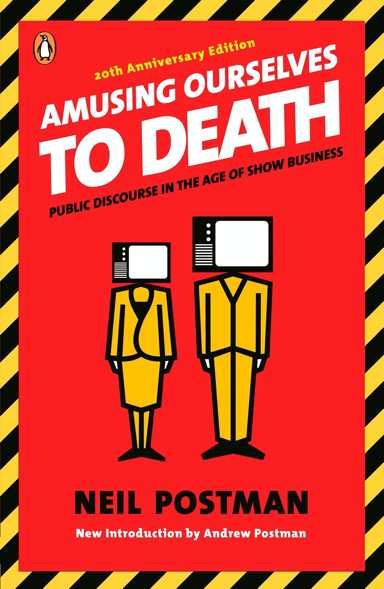
“This idea – that there is a content called ‘the news of the day’ – was entirely created by the telegraph (and since amplified by newer media), which made it possible to move decontextualized information over vast spaces at incredible speed. The news of the day is a figment of our technological imagination. It is quite, precisely, a media event. We attend to fragments of events from all over the world because we have multiple media whose forms are well suited to fragmented conversation.” (p. 8) Postman seems to have a special ire for the way news has changed under the media-metaphor of television. In this quote, he both introduces the basic concept of news in the Age of Show Business, and introduces the concept of decontexualization, which he continues to explore. “News of the day” is information that does not immediately affect the listener’s life, but instead only has novelty value. It cannot change us and has little practical value; it is something that only exists in a world linked by media like the telegraph or television. Further, it is decontextualized. We hear a sensational story about a rape that takes place on an Indian reservation, and might get emotionally affected, but can do nothing about it; most of us have never been to an Indian reservation, and would have little agency there in any case. He suggests that our news and world are now comprised of information that has no practical context. Finally, in this quote, he suggests that this existence of decontextualized information is not something we control, but rather something that happened because our “multiple media” inspired it. This touches on his consistent and implicit argument that a media-metaphor enacts change on its own. This can tie to frame of reference by, how we decide to interpret the news. Weather you get your news from CNN or MSNBC or FOX NEWS, that decision is made from your frame of reference. This can be influenced by how you were raised, where you are from, what your family and you do for a living, and things like that.
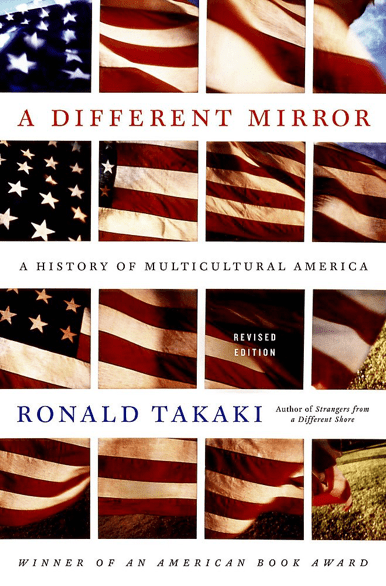
“I believe our education system as a whole has not integrated the histories of all people into our education system, just the Eurocentric view of itself, and the White-centered view of African Americans, and even this is slim to nonexistent.” (p.38) Takaki’s novel focuses on the history of minority groups in America whose stories and histories have been on the sidelines for centuries. Despite the United States of America being a multicultural society, the mainstream history is mainly WASP-centric even in the academic curriculums. Even the explored history of the minority groups that is integrated into the system is expressed in a white-America perspective. Therefore, Takaki critiques this dynamic in the assertion while offering a different view on ethnic history of the United States from African Americans, Native Americans to Asian Americans. Frame of reference is present in this part of the book when Takaki talks about how our different history time lines. He talks about how our history books start when Christopher Columbus discovered America in 1492. When really Native Americans have been living here since way before then. Some even think as early as 30,000 B.C. This proves that people frame of reference can change what history you believe and what history you take to be true.
Frame of reference is how our point of view affects our understanding. It is a set of criteria or stated values in relation to which measurements or judgments can be made. It is also a structure of concepts, values, customs, views, etc., by means of which an individual or group perceives or evaluates data, communicates ideas, and regulates behavior. Each of us has a particular vantage point from which we see and understand events. How we see and understand events may depend on, prior knowledge, assumptions, values, language. Assumptions and values may also influence our perceptions. Frame of reference has a major impact on society. For example, the perspectives of the most powerful members of society have influenced our collected history. We approach the world and our relations to others within a certain temporal (affairs of the present life) context.
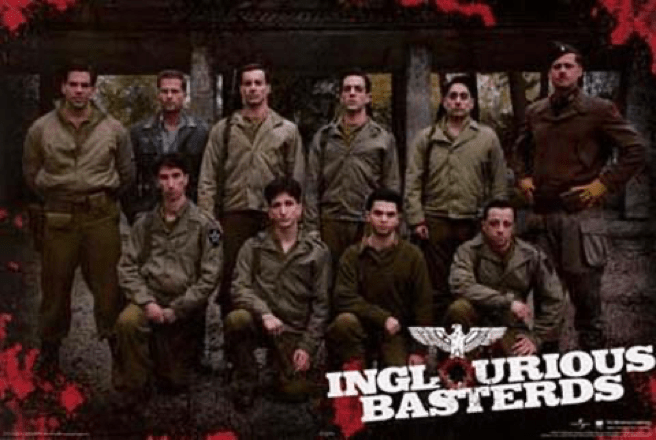
Inglorious Bastards that takes place during World War II. It is the first year of Germany’s occupation of France. Allied officer Lt. Aldo Raine (Brad Pitt) assembles a team of Jewish soldiers to commit violent acts of retribution against the Nazis, including the taking of their scalps. He and his men join forces with Bridget von Hammersmark, a German actress and undercover agent, to bring down the leaders of the Third Reich. Their fates converge with theater owner Shosanna Dreyfus, who seeks to avenge the Nazis’ execution of her family. You can make the connection between frame of reference and this movie because it is about the Nazis and Allies during World War II. This was a time in our history where your opinion and political stance determined where you stood during the war. Most people we shown how bad the Nazis were and the people of Germany were shown that Hitler and his army were the leaders that Germany needed after World War I.
References:
Helson, H. (1947). Adaptation-Level as Frame of Reference for Prediction of Psychophysical Data. The American Journal of Psychology, 60(1), 1-29. doi:10.2307/1417326
Postman, N. (1986). Amusing Ourselves to Death. New York: Penguin Books
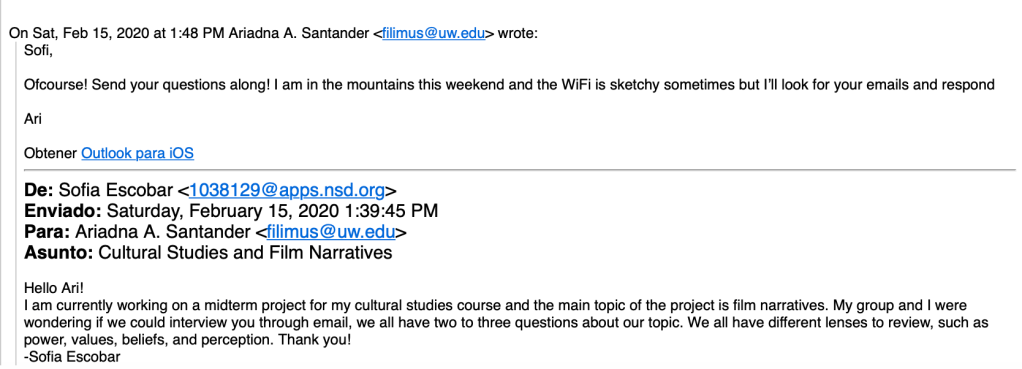
Santander, A.A. (2020, February 17). Email Interview
Takaki, R.T. (2008). A Different Mirror: A History of Multicultural America. New York: Back Bay Books
Tarantino, Q. (Directior). (2009). Inglorious Bastards [Motion Picture]. United States: Universal Pictures
Film Narrative: Power

Jessalynn Isidro
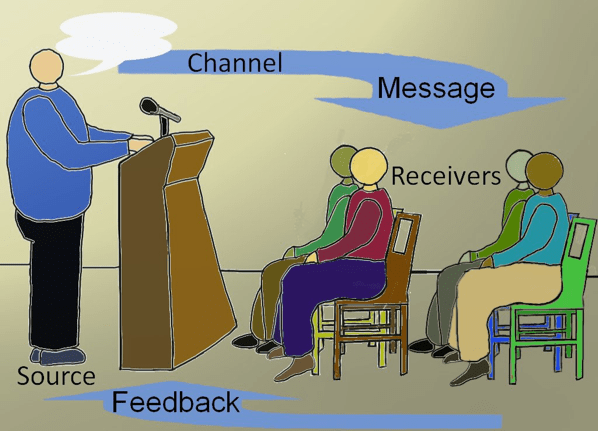
Film narratives have a huge impact on our society. It bases film narratives for people to believe what actors are doing are based on real-life issues. Many of these actors deliver messages to the audience to understand and interpret in their own ways. Many of these film narratives have different genres and are based on many topics like comedy, horror and historical events. Once people see a film, the film tends to make lots of money. Usually, films use five stages, from beginning to end to manipulate a wider range of people. The films goal is to get a huge audience and most importantly to watch the entire film. Films have a lot of control in our society, sometimes we don’t even notice. Power according to Dworkin & Dworkin, 1999 “is the actual use of resources to influence and control others.” When films are given this power to control and influence others, it can be both good and bad. Some films are based on real-life issues that are happening or have happened in the past. Films can also have a power that is negative and positive. There are some that can give out a positive message about saving the economy. There are also those that can inspire people to work harder and be proud of whom they are. Some can give a message, but the audience can interpret it wrong. They can also give people the ability to learn and see different parts of the world they’ve never seen. Many of us have no idea what is happening around the world, many of us get news that isn’t even irrelevant.
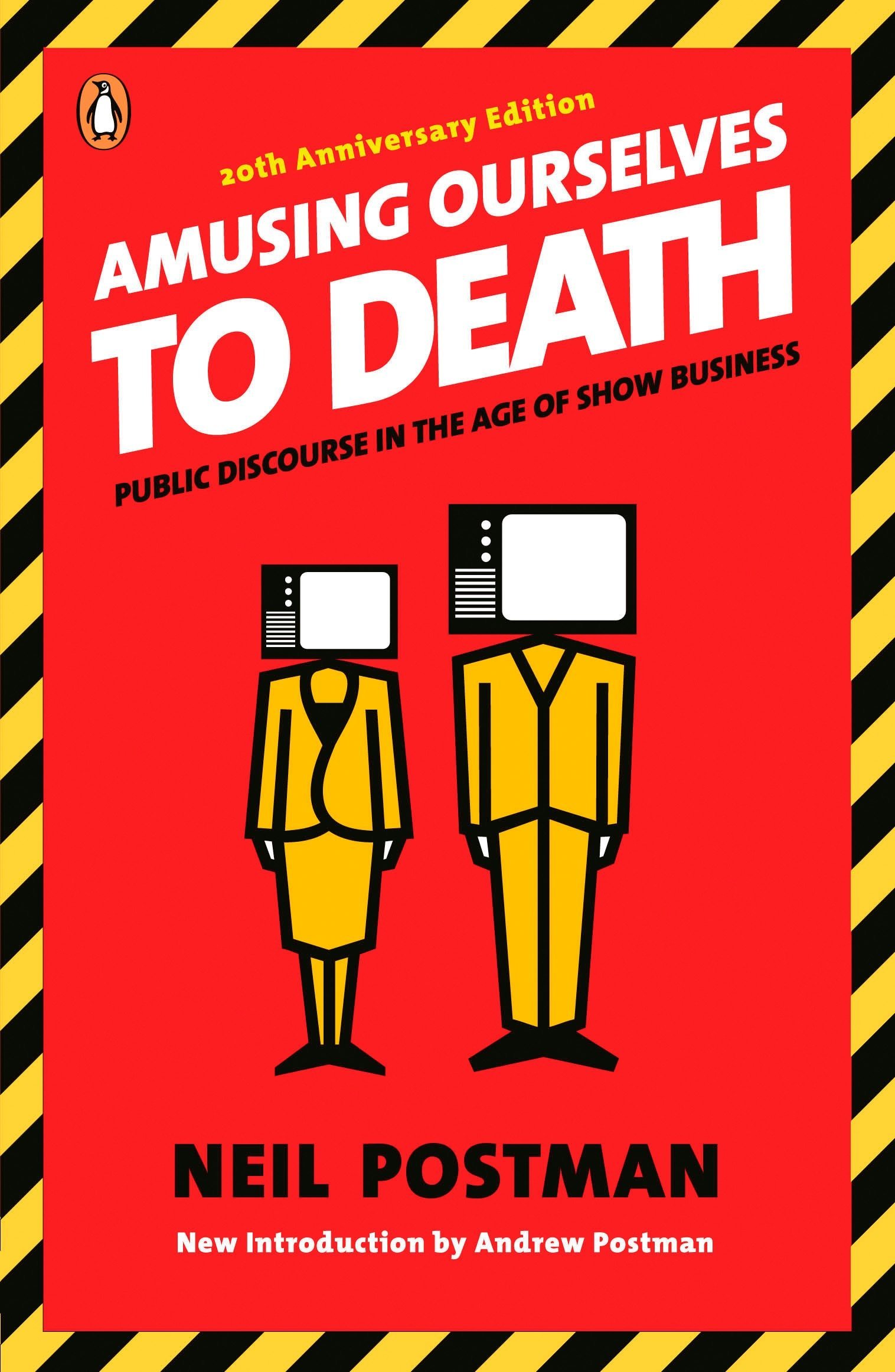
According to Postman, “Amusing Ourselves to Death” in the chapter “Media Epistemology” he states, “you are mistaken in believing that the form in which an idea is conveyed is irrelevant to its truth.” Postman states, in whatever form an idea is portrayed throughout media you can never tell whether it’s true or not. Many of the things we see in media are irrelevant, as he calls. He also stated that media is portrayed in different parts of media in many different ways and no one can tell whether if its fake or true since films are used to be realistic and make the audience feel like it’s true.
Postman, N. (1986). Amusing ourselves to death. Heinemann.
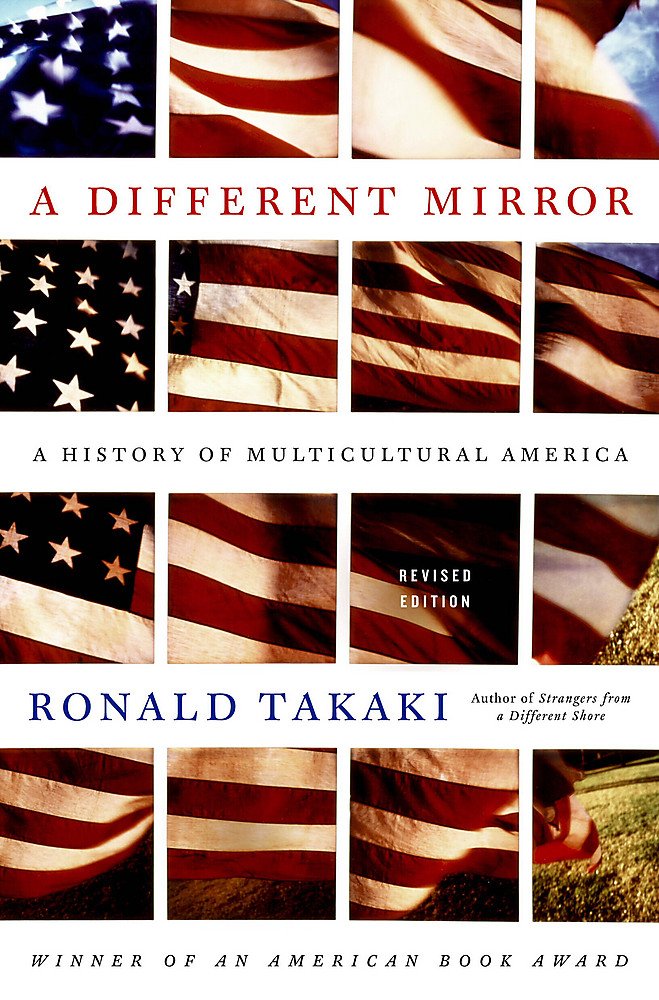
In Takaki, “A Different Mirror” in the chapter, “Toward the Stony Mountains,” Takaki talks about how Native Americans were removed from their land to a reservation. Many Native Americans were killed. He also talked about how then President Thomas Jefferson had sent a note to Andrew Jackson talking about how they were going to remove Native Americans from their land. Jackson had also called them cruel names like “savage bloodhounds and thirsty barbarians.” President Thomas Jefferson gave the power to Andrew Jackson that he had every right to destroy Native Americans. Andrew Jackson would rage throughout letters and talk about how much he wanted to destroy Native Americans and finish them. In a part of one of this letters, he said, “I must destroy those deluded victims doomed to destruction by their own restless and savage conduct,” Jackson had written this to General Thomas Pinckney. He had written that letter with rage and had the power to gather his troop and ordered almost all of the Native Americans be killed. They even had the power to kill women and innocent children. Millions of Native Americans had been killed.
Takaki, R. T. (2008). A different mirror: a history of multicultural America. New York: Back Bay Books/Little, Brown, and Co.
For our community partner we chose, Ariadna A. Santander. She’s the manger at UW. She mainly studied fine arts and cinema, She’s developed understanding of cultural films and literature. I asked her three questions based on power throughout films. We interviewed her through email. My three questions were as follows. How does power play a role in film narratives? Does power throughout films change a person’s opinion and thoughts? Do you believe that power throughout films can be positive and negative? She responded by saying that films with power play a huge role in film narratives by manipulating people into believing everything they are watching. Power does change a person’s opinion because sometimes the person gains a connection with the actor or film and becomes influenced by the actors/films actions. Yes, I do believe power throughout films can be positive and negative. Positive in the way of showing people the true meaning of the real world happenings. An example would be a true events movie. Negative in the way that people never see what truly happens in some films, some don’t show real life issue people have to face.
In a movie we saw and analyzed each of the lenses. We chose a movie called, “Inglorious Bastards” which took place in 1914. It was divided into five chapters. It started off with a German soldier named Landa, who interrogates a French dairy farmer, Perrier LaPadite and tells him to tell him where exactly he had hidden a family they were looking for, they were a family of Jews. He had to confess in order to save his family. Leading to Perrier’s confession, he tells them that he had hidden them under the floorboards in the house. Landa then kills them all and only one family member survives. The movie then portrays another scene, about a group of men who call themselves the Inglorious Bastards. This group of men is all Jewish-American soldiers who kill Nazi’s. The leader of the group is a guy named Lieutenant Aldo Raine, he is the one who leads the men to find Nazi’s and peel of their scalps. The group then locates a group of Nazis, which later helps them find out where the rest are hidden and helps them determine what kind of army they would have to deal with.
The movie’s ending talked about the lone family survivor Shoshana. Shoshana was forced into changing her identity; she had a new name, Emmanuelle Mimieux. She owned a small cinema that her uncle and aunt had passed on to her. Emmanuelle later meets a man named Fredrick Zoller who turns out to be a Nazi. Fredrick was well known. He was specifically known for the killings of 250 soldiers throughout the war. Emmanuelle later tells Fredrick that she owns a cinema. Fredrick comes up with the idea of having his friend, Joseph Gobbles play his premiere at the cinema.
Joseph Gobbles then debates whether to have his premiere in the cinema. Joseph later invites Landa to check out for safety. Landa is the German soldier who had killed Emmanuelle’s family. Emmanuelle was hoping that Joseph wouldn’t recognize her as she was talking to him, but Joseph seemed to have forgotten her. Landa wants to make sure the cinema is safe and plans to set up a meeting to checkout her cinema. They go to check out her cinema and then a new character is introduced, a black Frenchman names, Marcel. Marcel later becomes Emmanuelle’s lover. She and Marcel plan to kill the five main leaders to end war and for vengeance. They decide to use Nitrate film, which is very flammable, and it wouldn’t be too obvious. Emmanuelle makes a video of herself explaining who she was and why she’s doing what she is doing. Emmanuelle collects as many nitrate films as she could find and stacks them near the stage. Her hope was burning down the cinema and the people in it; this meant every person who was a Nazi. The movie portrayed two different endings, the other ending shows the group Inglorious Bastards making up a plan to end war by wrapping bombs around their legs, to keep others from seeing them. Then Landa noticed something weird about Aldo and a person nicknamed, Little Guy and handcuffs them. Two of the Inglorious Bastards went inside the cinema to prepare for the assassination of Hitler. Then Shoshanna’s video is playing, while it’s playing, then Fredrick Zoller comes in and she shoots him. She then gets close to him to make sure he’s dead and he turns around with a pistol in his hand and kills her. As the video is playing, in the background, Shoshanna told Marcel that his cue was when she said “Do it now Marcel” Marcel said yes, my love as a tear dripped down his cheek and he throws a cigarette into the pile of nitrate films. The fire bursts and the cinema is in flames. The fire kills everyone that was trapped inside. Then Landa takes Aldo and Little Man to a deserted forest and turns himself in, hoping for forgiveness. Landa then talks to Aldo telling him he would take off his Nazi uniform. Aldo was not proud and wanted people to know that Landa was always a Nazi no matter what. They carved a Nazi symbol on Landa’s forehead. When analyzing this movie for my lens I thought the three parts that showed power were in the beginning of the movie. Landa used his power to manipulate Perrier to confess where he had hidden the Jews in order to save his family. The other part was when the Inglorious Bastards used their power to carve a Nazi symbol on a Nazi’s foreheads to symbolize that a Nazi is always a Nazi no matter what, even if they don’t have on their Nazi uniform. The last part of power was when Shoshanna used her power to gather all five leaders and capture them into the cinema killing them all for her vengeance.
2019, July 22). Retrieved February 18, 2020, from
https://www.google.com/search?q=inglourious+basterds&rlz=1C5CHFA_e
References:
A Different Mirror: A History of Multicultural America, Ronald Takaki. (2018, April 12). Retrieved February 18, 2020.
Ahnood, A., Edge, J., & Arokia Nathan. (n.d.). Thin film power harvesting system for displays. Retrieved from https://www.infona.pl/resource/bwmeta1.element.ieee-art-000006294901
Power. (n.d.). Retrieved from https://www.merriamwebster.com/dictionary/power?src=search-dict-hed
Postmann, N. (1986). Amusing ourselves to death. New York: Penguin Books.
Power and Agency in modern filmsCharacter portrayal analyses using computational tools. (n.d.). Retrieved from https://homes.cs.washington.edu/~msap/movie-bias/
Santander, A.A. (2020, February 17). Email interview.
Film Narrative: Beliefs
By, Lauren Allen
In Professor Ortiz’s Humanities 150 course we researched different lenses and began to try and implement them regarding specific social and historical issues. My group chose the social and historical issue of Film Narratives and I applied my lense of beliefs in order to re-imagine and understand the truth behind beliefs in film. In class we learned there are three main types of beliefs, first one being personal beliefs; opinions that all individuals hold about their environment and their place in their environment (Rokeach, 1968). The second type of beliefs are peripheral beliefs, these are usually unimportant and very easy to change, such as pizza is better than pasta. The last type is core beliefs, this form is usually fundamental that has been held for a long time and cannot be easily changed. People usually defend core beliefs against attack. When these beliefs change, normally so do many other ones. Although beliefs sound very personal, you can find beliefs in media, film and other forms of entertainment.

Eugene. (2018, August 17). The Big Six Studios Reach Agreement with Kodak to Keep Film Alive. Retrieved February 18, 2020.
To begin my post, I would like to talk about the film industry and some basics within creating cinematography. Directors usually have a major part in contributing to the characters personal beliefs and values. Without directly saying what a character believes in, a director shows you how they react in their environment and what role they play in their society. While doing some research on beliefs in film, I came across some very interesting information. I first found an ebook by Nils J. Nilsson called “Understanding beliefs”, in this book Nilsson explains that beliefs make up a majority of our knowledge because people have opinions about objects, culture, past and present issues. People often use beliefs to explain, predict, console, create and most importantly entertain. There are many different degrees of beliefs based upon the probability something is true. Nilsson says “all are products (with varying degrees of credibility) of fertile minds trying to find explanations for observed phenomena.” (Nilsson, pg.3) meaning, people use beliefs to justify truth whether it’s a proven fact or not, however they can easily be manipulated and changed based on scientific evidence or other factual causes. Similarly exposure to specific fictional narratives exert significant effects on attitudes and beliefs, while reading a scholarly article called “Changing Real‐World Beliefs With Controversial Movies: Processes and Mechanisms of Narrative Persuasion” by Juan-Jose Ignartua and Isabel Barrios they explain multiple studies done to show the impact of film narratives on a person’s beliefs. The first experiment was conducted in America, they had 107 participants watch the movie JFK directed by Oliver Stone. They interviewed the subjects before and after viewing the movie, overwhelmingly after the movie a majority of them believed to a greater extent that Cuban exiles, arms manufacturers, Pentagon officials, or the CIA and Lyndon Johnson took a decisive part in the matter, contrary to the official government version. They did this experiment with other controversial movies and everytime it seemed after watching the movie a person’s beliefs changed based upon what they thought initially on the topic. For the second experiment they had one group watch a specific Law and Order episode and the control group watch some alternate audio-visual content. Similar to the previous study, both groups were required to talk about their political views and ideology as well as fill out a questionnaire about controversial topics before and after viewing the episode or audio-visual content. Those who watched the Law and Order episode seemed to be more in favor of the death penalty compared to the control group, regardless if the person identified as a liberal or conservative. It seems that the viewing of a film narrative directly interferes with the production of a counter argument. Regardless of a scientific experiment, I felt my attitudes are easily changed as well after viewing a movie or show about a controversial topic.

Sneed, T. (2013). Your Guide to This Fall’s JFK Film and TV Specials. Retrieved February 18, 2020.
My group and I decided the best way to tackle this project about film narratives was to choose a war based movie and analyze it using our different lenses. We chose the movie Inglorious Basterds directed by Quentin Tarantino. The movie is based in Germany occupied France during the Nazi reign. It begins showing a dairy farming family in the rural part of France, S.S officer Hans Landa; a member of the Nazi party tries to find the last Jewish family of this area. Once uncovering that the family was hiding underneath the floorboards, they were all quickly executed except for the eldest daughter Shoushana Dreyfous who escaped. She later opened her own Cinema and went by a new name, Emmanuelle Mimieux. After meeting a high officer of the Nazi party, he quickly requested to have the cinema be rented out for a Nazi movie premiere. Agreeing, Shoushana soon planned on burning the cinema down in revenge on the execution of her family. She wasn’t the only one who loathed the Nazi party, the Basterds did whatever they could to destroy the Third Reich. The Basterds were a group of Jewish allies who’s goal was to kill every Nazi member and collect their scalps. Lt. Aldo Raine was the leader of the Basterds and committed violent acts of retribution against the Nazis. He gained forces with Briget Von Hammersmark, an undercover agent and actress to disthrown the Nazi party. I felt this movie was very interesting to analyze because of the dark history of the Holocaust and beliefs within. As most know the Holocaust began becasue of the beliefs of nationalism, antisemitism and ethnic cleansing. Although watching this movie didn’t change my inital views of the Holocaust it did give me a new perspective that the members of the Nazi party truly did believe that systematically killing millions of jews was the right thing to do for their country. For example, near the middle of the movie shortly after introducing the Basterds, they captured a Nazi soilder and he said he would rather die for his country then tell them where the other soilders were based. Another example of beliefs is how Shoushana would burn down her own cinema then let the Nazis live, all in act of revenge. The master narrative during World War II in Europe was in support of the genocide of Jewish people, it’s remarkable how much the master narrative has an impact on the people.
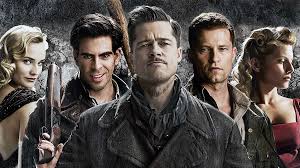
Inglourious Basterds. (2009). Retrieved February 18, 2020.
The master narrative portrayed in Ronald Takaki’s book, is based upon that the United States is a white country, although it’s made up of all immigrants, most not derived from Europe. “The Master Narrative’s narrow definition of who is an American reflects and reinforces a more general thinking that can be found in curriculum, news and entertainment media, business practices and public policies. Through this filter, interpretations of ourselves and the world has been constructed, leaving many of us feeling left out of history and America itself.” (Takaki, pg.5) Beliefs that America was founded by European settlers has shaped the United States today and continues to be strengthened by the argument that whites are more powerful. Beliefs about the American people are directly influenced by the use of media and television. “As the influence of print wanes, the content of policies, religion, education, and anything else that compromises public business must change and be recast in terms that are most suitable to television.” (Postman, pg.8) Neil Postman is quick to explain how telegraphy and photography strip information from its context, everything seen on television is twisted to entertain. It’s unfortunate how most are able to believe things heard in the media, often leading to shaping their personal beliefs.
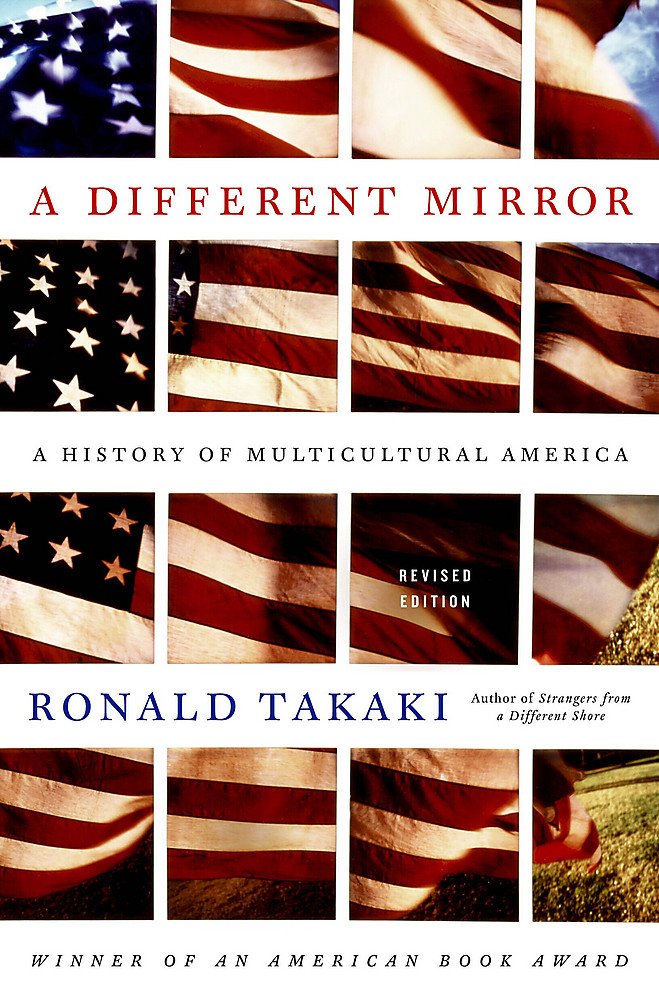
A Different Mirror: A History of Multicultural America, Ronald Takaki. (2018, April 12). Retrieved February 18, 2020.
For my groups community partner we reached out to a University of Washington professor and film lover, Ariadna A. Santander. I asked her two questions regarding my lens of beliefs; first question was when analyzing film, how big of an effect does the environment have on the characters? And my second question was how does someone’s place in their environment impact them (Ex. Class system, age, race, gender, etc.) in film? Professor Santander explained that a character’s environment plays a crucial role in storytelling, giving some examples of Citizen Kane and The Help. She mentioned that many films contain an element of foreshadowing or emancipation of stereotypes, helping prove the main idea of the plot.
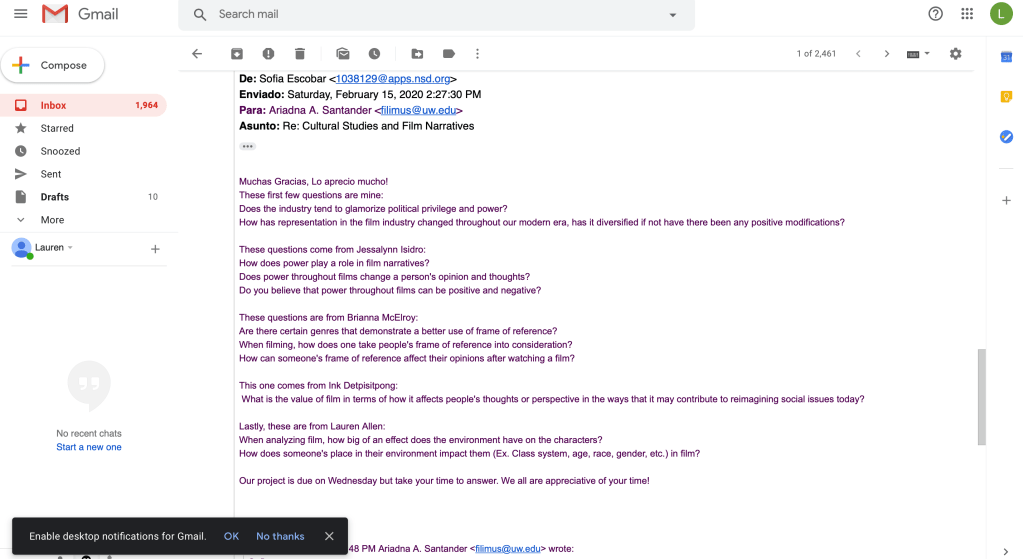
Santander, A.A. (2020, February 17). Email interview.
In conclusion, beliefs are everywhere. They shape everything we do and can be influenced greatly by what is seen throughout media and film narratives.
References
A Different Mirror: A History of Multicultural America, Ronald Takaki. (2018, April 12). Retrieved February 18, 2020.
Barrios, I., & Igartua, J. J. (2012). Changing Real‐World Beliefs With Controversial Movies: Processes and Mechanisms of Narrative Persuasion.
Eugene. (2018, August 17). The Big Six Studios Reach Agreement with Kodak to Keep Film Alive. Retrieved February 18, 2020.
Inglourious Bastards. (2009). Retrieved February 18, 2020.
Nilsson, N. J. (2014). Understanding beliefs. Cambridge, MA: MIT Press.
Postmann, N. (1986). Amusing ourselves to death. New York: Penguin Books.
Rokeach, Milton. (1968). Beliefs, attitudes, and values. San Francisco, CA: Jossey-Bass.
Santander, A.A. (2020, February 17). Email interview.
Sneed, T. (2013). Your Guide to This Fall’s JFK Film and TV Specials. Retrieved February 18, 2020.
Takaki, R. T. (2008). A different mirror: a history of multicultural America. New York: Back Bay Books.
Tarantino, Q. (Director). (2009). Inglorious Bastards [Motion Picture]. United States: Universal Pictures.
Film Narrative : Values

Film Production. Retrieved from https://filmhubatl.com/film-production-atlanta/. Retrieved on 02/17/2020
Ingkawat Detpisitpong
To begin this blog, I need to introduce the definition of a ‘narrative’. A narrative can come in many forms. It can be in the forms of a novel, a movie, an essay, a book of poems, a diary and many others. It can be fictional like the famous novel ‘The Catcher In the Rye’ by J.D Salinger or non fictional like ‘The Narrative of the life of Frederick Douglass’ written by the former slave Frederick Douglass. In a narrative the story is narrated by the main character, the narration will give the reader or watcher a series of events and present them with different characters and will normally though not all of the time be set in a linear timeline (where events are in the order in which they happen). This blog will focus on the form of a Narrative film. Many people agree that a narrative film will have two parts: a story being presented and the story being told by narration which is a story being told with commentary, mainly from the author’s point of view. In most fictional ‘Narrative Film’, the story telling technique is assisted by the camera’s angle which focus a lot on characters’ faces and their actions. In a novel the description is clearly written along with thoughts and feelings. However, in a ‘Narrative Film’, we cannot just explain what is being felt. In a film there has to be a lot of visuals used to show possible thoughts and feelings to the viewer. Actors have to sometimes exaggerate how a normal person would usually react physically so that the viewer has help to understand what is going on in their minds of the characters.
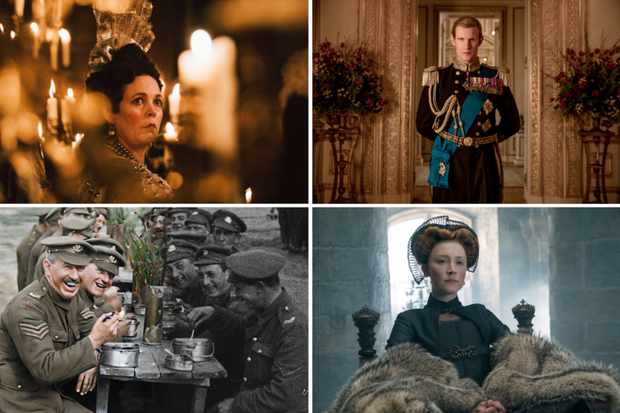
We also have to talk about what we mean when we talk about ‘Values’. We can have our own personal values which can come from within, can come from religion, can come from our families, friends and experiences. Values help us to exist, they let us feel comfortable after making a decision because we can compare our decisions to our values and we can decide whether we have made the right decisions based on how we have lived our lives or how we think that lives should be lived. The Cambridge English Dictionary states that ‘Values’ are “The principle that help you to decide what is right and wrong, and how to act in various situations”
When we value something we decide how important that thing is to us. Different things mean more or less to different people. For example someone could value their career more than their family, and they will make life decisions and even small decisions based on their values. We must also remember that values are not given to us at the beginning of our lives, and stay the same until we die. Different experiences and learning can shift our values. They can be shifted for many reasons or by many things. For example, new people come into our lives, and people leave our lives and also we may have held something valuable that may have turned out to be less valuable than we first thought. Another example is in the essay “Make your values mean something,” the author, Patrick M. Lencioni, tells a story about how a CEO of a corporation changed his corporation’s values after receiving a negative reaction from an audience of employees after a video was shown describing these values. We are not in complete control of our own values as much as this CEO can be totally in control of his corporations values. Most of the time, our values most importantly must work for us but they should also work for those around us and who we interact with in order to have an easier life.
Film Narrative: Perception
Sofia Escobar
Perception is a very strong element that enhances a film because of the immediate response that is generated by past experiences, personal aesthetic, and morals of an individual. By definition, Perception means “A result of perceiving: Observation” according to the Webster Dictionary. This explains why cinema and perception go hand in hand, these concepts would not exist without each other. Every person has their own perception of reality, this of course affects the overall outcome of opinions and controversy of a film. Many historical films display a range of emotions that are very clear and set a guideline for modern day films. Political issues present themselves in many different movies no matter what generation it is. This is because politics have always been connected to social issues and the divination of groups. Inglorious Bastards is a film that shows many different points of view throughout World War II. There’s an extremely realistic portrayal of the attitudes Nazis had against the Jewish people of their communities. This film begins in Nazi occupied France with a father and his three daughters hiding a Jewish family. A Nazi officer comes to their small home in order to interrogate the father because of the report that stated the history of Jewish families that used to live in their home. As the German soldier continues the questioning, he slowly explains the mindset he enters as he searches for Jews that are hidden and threatens the family with arrest if he does not comply. When the officer accesses the information he demands for, he orders the soldiers that accompanied him to assassinate the Jewish family that’s hidden under the floorboards. The daughter, named Shosanna, of the Jewsish family manages to survive the attack and flee. As the movie develops, the audience is introduced to the ‘Inglorious Bastards’ who are eight Jewish Americans that have been militarily trained and have the desire to exterminate as many Nazis in Germany as they can. This expresses humanity in two different lights. One being heavily violent and the other being a peaceful yet risky action. There were many perceptions that were commited to ending the Nazi regime and were willing to risk a lot in order to be allies. While the storyline and goals of the Inglorious Bastards are revealed, Hitler is portrayed as a bitter man that doesn’t tolerate the reality of the circumstances of Germany winning the war. As the plot continues to thicken, Shosanna continues her life as Emmanuelle Mimieux to protect her identity and owns a small cinema in Paris. She is exposed to life as a civilian under German control while carrying on the everlasting horror of the massacre of her family. One day while tending to her theater, a german soldier takes a fascination in her and demands that she rents out the cinema to the leader of the Nazi propaganda. This results in Shosanna formulating a meticulous plan to burn the cinema down whilst the German nationalism night is occuring. This plan coincides with the Jewish American soldiers, who find out about the event and have a source into infiltrating the cinema. Their perceptions collide without even having knowledge of the other’s existence.
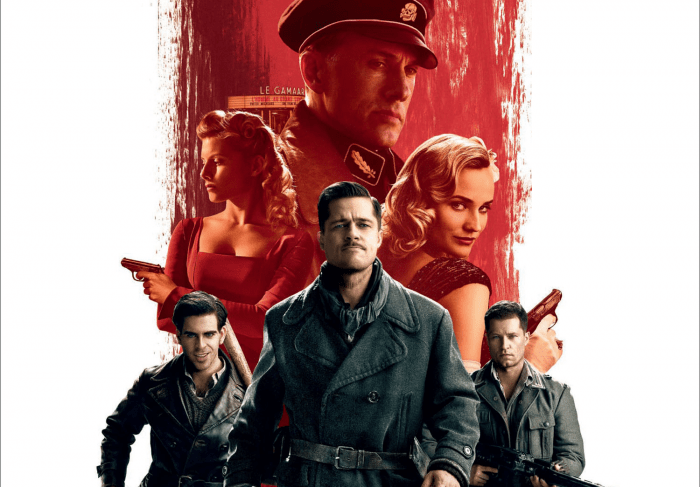
“Inglorious Bastards” demonstrations of perception connects to Takaki’s understanding of Jewish oppression during World War II. Throughout “A Different Mirror”, Takaki discusses race and gender in American history and how those two factors played a role in equality. During the Holocaust, Jewish Americans faced many trials and tribulations when deciding how to educate their children and other civillians on the religious discrimination being displayed in Germany. Meanwhile, the United States was still unsure on how to assist the Jewish people because of economic factors, “existing restrictions were needed to keep out immigrants who would take jobs away from American workers” (Takaki, pg. 372). This ongoing conversation opened many perspectives of humanity, ultimately President Roosevelt had already “extended the visas for twelve thousand refugees” (Takaki, pg. 373), he refused to let more Jewish refugees into the country. Although America was known for being an ally, they had faced many setbacks before they allowed twenty thousand children refugees into the country on the terms of them not becoming public charges. One of the main concerns that deterred our country from becoming consistent with helping the Jewish refugees was the racial Quota instilled in our society. These attitudes are displayed in “Inglorious Bastards” when Jewish Americans take matters into their own hands and continue their ramage in Nazi occupied France in order to send a message to the German Nationalism Hitler created. These contrasting perspectives managed to find a common ground, shown through the admittance of the refugees while having to be supported by organizations or individuals.
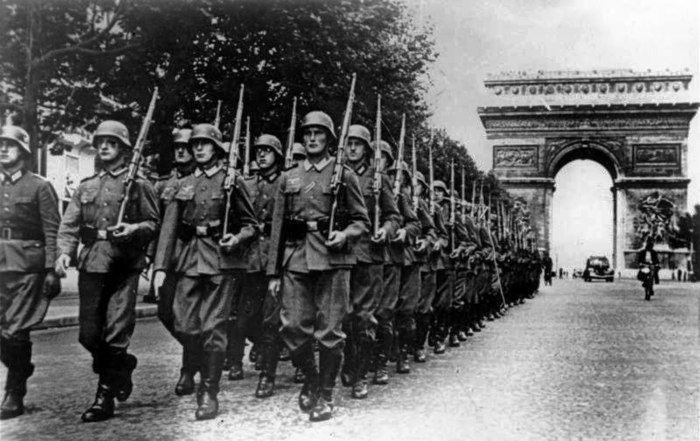
Postman’s “Amusing Ourselves To Death” imposes a different perspective of U.S. history by providing economic viewpoints and religious conflict. America was set on a basis that it would be a country with religious freedom and separation of church and state but was influenced by Christianity during certain time periods. Prior to World War II, President Jefferson was very much non religious and believed that creed was “human inventions, set up to terrify and enslave mankind, and monopolize power and profit” (Postman, pg. 54). This statement caused backlash from churches and the controversy continued through his term. As technology developed in the early nineteen hundreds, the news was beginning to be more published and information about current world issues were being spread. The progression of communication is displayed throughout “Inglorious Bastards” when Nazis and the U.S. army are receiving information. These advances created new economic opportunities across the globe, “influence of the printed word in every arena of public discourse was insistent and powerful not merely because of the quality of the printed matter but because of its monopoly” (Postman, pg. 41). This point of view reflects a less compassionate approach to reporting news and keeping connections. Someone who has a lot of governmental power, may have a more economic comprehension of religion and technological progression.
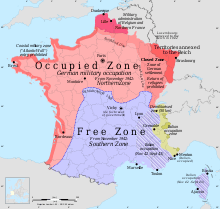
Occupied France during World War Ii. (n.d.). Retrieved from https://en.wikipedia.org/wiki/Zone_interdite
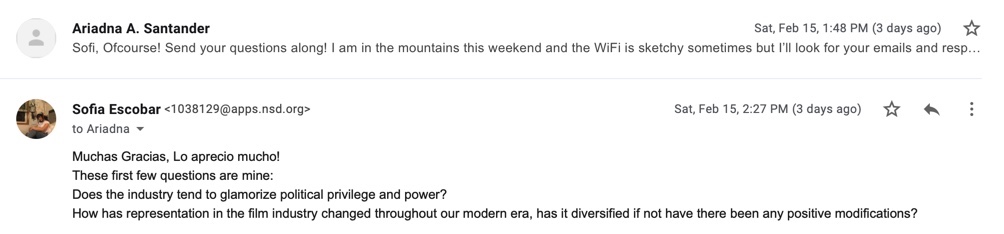
Our community partner was Ariadna Santander, otherwise known as Ari, is a manager at the University of Washington. She mainly studied fine arts and cinema, Sanatander has a highly developed understanding of cultural films and literature. I asked her two questions that would expand my understanding of the film industry and the contribution to cultural and social issues. The questions were “does the industry tend to glamorize political power and privilege?” and “how has representation in the film industry changed throughout the modern area, has it diversified if not have there been any positive modifications?”. She replied with very meaningful responses using perception as a connection to modern cinema. She answered my first question with examples of recent films, “if we are speaking about mainstream cinema, often a reflection of popular culture then maybe… However cinema has the power to tell a story from many different perspectives and it truly depends on the writer, the director and the producers” (Santander). Her answer expanded my perception of the industry and the various factors that play into creating a film of any genre. Santander also brought up many important benefits of representation and the consideration of consumerism, “if we are speaking about people having access to cinema as an art form, we are going to run into the question of cinema an an economic force” (Santander). The value behind representation relates back to communities feeling included in our culture, for instance the film, “Crazy Rich Asians” and “The Farewell”- deeply impacted Asian communities – for representation of Asian characters” (Santander). Ariadna’s answers caused me to think deeply about cultural and political films and the impact they have by perception. Ultimately, all movies are up for interpretation and are manipulated to show different events and issues in new lights that contribute to conversations and empowerment.
References
- (n.d.). Retrieved from https://mail.google.com/mail/u/0/?tab=om1#inbox/QgrcJHsTkLFKXvXgTKCdHwnspXmTwMcjfKL
- Inglorious Bastards. (n.d.). Retrieved from https://www.imdb.com/title/tt0361748/
- Perception. (n.d.). Webster Dictionary.
- Postman, N. (1986). Amusing ourselves to death. Heinemann.
- TAKAKI, R. O. N. A. L. D. (2012). Different Mirror a history of multicultural america (revised edition). Place of publication not identified: EBOOKIT COM.
 Film Narrative #1
