
Film Production. Retrieved from https://filmhubatl.com/film-production-atlanta/. Retrieved on 02/17/2020
Ingkawat Detpisitpong
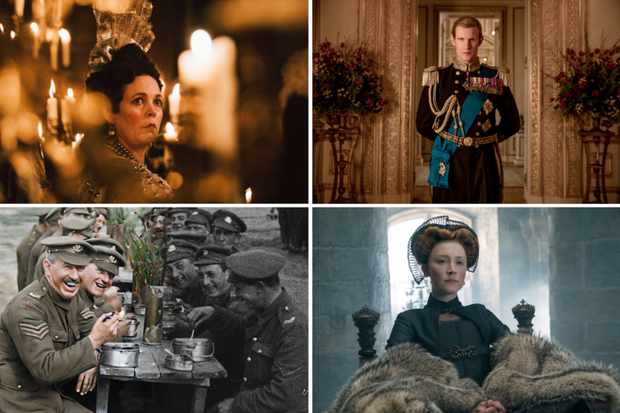
To begin this blog, I need to introduce the definition of a ‘narrative’. A narrative can come in many forms. It can be in the forms of a novel, a movie, an essay, a book of poems, a diary and many others. It can be fictional like the famous novel ‘The Catcher In the Rye’ by J.D Salinger or non fictional like ‘The Narrative of the life of Frederick Douglass’ written by the former slave Frederick Douglass. In a narrative the story is narrated by the main character, the narration will give the reader or watcher a series of events and present them with different characters and will normally though not all of the time be set in a linear timeline (where events are in the order in which they happen). This blog will focus on the form of a Narrative film. Many people agree that a narrative film will have two parts: a story being presented and the story being told by narration which is a story being told with commentary, mainly from the author’s point of view. In most fictional ‘Narrative Film’, the story telling technique is assisted by the camera’s angle which focus a lot on characters’ faces and their actions. In a novel the description is clearly written along with thoughts and feelings. However, in a ‘Narrative Film’, we cannot just explain what is being felt. In a film there has to be a lot of visuals used to show possible thoughts and feelings to the viewer. Actors have to sometimes exaggerate how a normal person would usually react physically so that the viewer has help to understand what is going on in their minds of the characters.
We also have to talk about what we mean when we talk about ‘Values’. We can have our own personal values which can come from within, can come from religion, can come from our families, friends and experiences. Values help us to exist, they let us feel comfortable after making a decision because we can compare our decisions to our values and we can decide whether we have made the right decisions based on how we have lived our lives or how we think that lives should be lived. The Cambridge English Dictionary states that ‘Values’ are “The principle that help you to decide what is right and wrong, and how to act in various situations”
When we value something we decide how important that thing is to us. Different things mean more or less to different people. For example someone could value their career more than their family, and they will make life decisions and even small decisions based on their values. We must also remember that values are not given to us at the beginning of our lives, and stay the same until we die. Different experiences and learning can shift our values. They can be shifted for many reasons or by many things. For example, new people come into our lives, and people leave our lives and also we may have held something valuable that may have turned out to be less valuable than we first thought. Another example is in the essay “Make your values mean something,” the author, Patrick M. Lencioni, tells a story about how a CEO of a corporation changed his corporation’s values after receiving a negative reaction from an audience of employees after a video was shown describing these values. We are not in complete control of our own values as much as this CEO can be totally in control of his corporations values. Most of the time, our values most importantly must work for us but they should also work for those around us and who we interact with in order to have an easier life.
 Film Narrative #1
