
Jessalynn Isidro
Film narratives have a huge impact on our society. It bases film narratives for people to believe what actors are doing are based on real-life issues. Many of these actors deliver messages to the audience to understand and interpret in their own ways. Many of these film narratives have different genres and are based on many topics like comedy, horror and historical events. Once people see a film, the film tends to make lots of money. Usually, films use five stages, from beginning to end to manipulate a wider range of people. The films goal is to get a huge audience and most importantly to watch the entire film. Films have a lot of control in our society, sometimes we don’t even notice. Power according to Dworkin & Dworkin, 1999 “is the actual use of resources to influence and control others.” When films are given this power to control and influence others, it can be both good and bad. Some films are based on real-life issues that are happening or have happened in the past. Films can also have a power that is negative and positive. There are some that can give out a positive message about saving the economy. There are also those that can inspire people to work harder and be proud of whom they are. Some can give a message, but the audience can interpret it wrong. They can also give people the ability to learn and see different parts of the world they’ve never seen. Many of us have no idea what is happening around the world, many of us get news that isn’t even irrelevant.
According to Postman, “Amusing Ourselves to Death” in the chapter “Media Epistemology” he states, “you are mistaken in believing that the form in which an idea is conveyed is irrelevant to its truth.” Postman states, in whatever form an idea is portrayed throughout media you can never tell whether it’s true or not. Many of the things we see in media are irrelevant, as he calls. He also stated that media is portrayed in different parts of media in many different ways and no one can tell whether if its fake or true since films are used to be realistic and make the audience feel like it’s true.
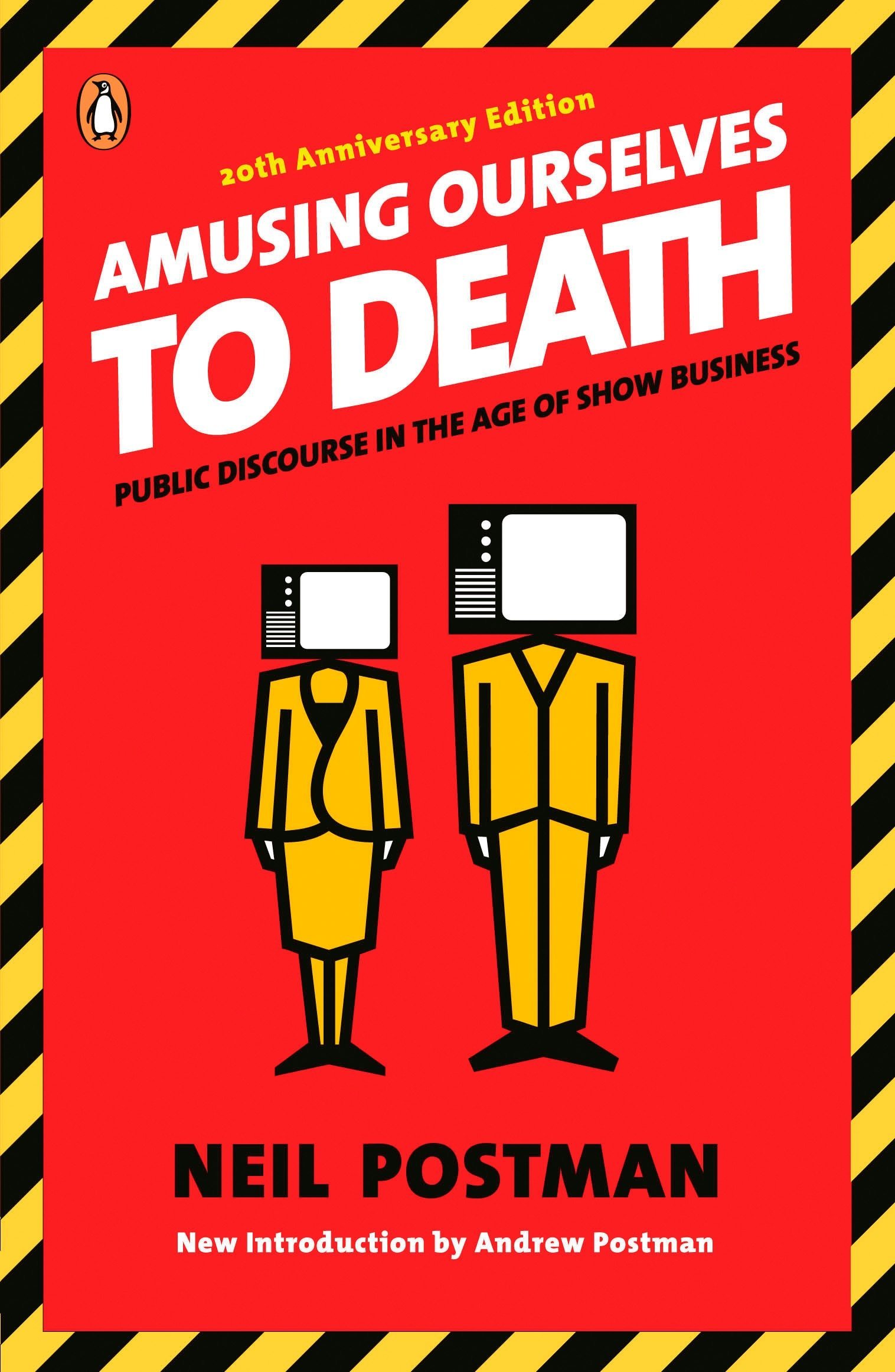
Postman, N. (1986). Amusing ourselves to death. Heinemann.
In Takaki, “A Different Mirror” in the chapter, “Toward the Stony Mountains,” Takaki talks about how Native Americans were removed from their land to a reservation. Many Native Americans were killed. He also talked about how then President Thomas Jefferson had sent a note to Andrew Jackson talking about how they were going to remove Native Americans from their land. Jackson had also called them cruel names like “savage bloodhounds and thirsty barbarians.” President Thomas Jefferson gave the power to Andrew Jackson that he had every right to destroy Native Americans. Andrew Jackson would rage throughout letters and talk about how much he wanted to destroy Native Americans and finish them. In a part of one of this letters, he said, “I must destroy those deluded victims doomed to destruction by their own restless and savage conduct,” Jackson had written this to General Thomas Pinckney. He had written that letter with rage and had the power to gather his troop and ordered almost all of the Native Americans be killed. They even had the power to kill women and innocent children. Millions of Native Americans had been killed.
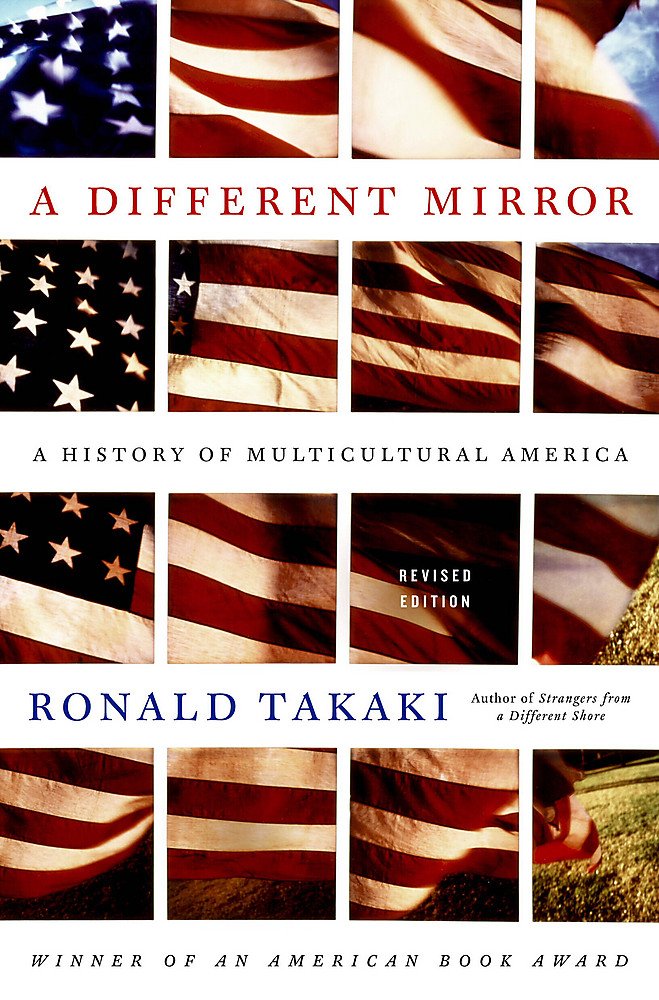
Takaki, R. T. (2008). A different mirror: a history of multicultural America. New York: Back Bay Books/Little, Brown, and Co.
For our community partner we chose, Ariadna A. Santander. She’s the manger at UW. She mainly studied fine arts and cinema, She’s developed understanding of cultural films and literature. I asked her three questions based on power throughout films. We interviewed her through email. My three questions were as follows. How does power play a role in film narratives? Does power throughout films change a person’s opinion and thoughts? Do you believe that power throughout films can be positive and negative? She responded by saying that films with power play a huge role in film narratives by manipulating people into believing everything they are watching. Power does change a person’s opinion because sometimes the person gains a connection with the actor or film and becomes influenced by the actors/films actions. Yes, I do believe power throughout films can be positive and negative. Positive in the way of showing people the true meaning of the real world happenings. An example would be a true events movie. Negative in the way that people never see what truly happens in some films, some don’t show real life issue people have to face.
In a movie we saw and analyzed each of the lenses. We chose a movie called, “Inglorious Bastards” which took place in 1914. It was divided into five chapters. It started off with a German soldier named Landa, who interrogates a French dairy farmer, Perrier LaPadite and tells him to tell him where exactly he had hidden a family they were looking for, they were a family of Jews. He had to confess in order to save his family. Leading to Perrier’s confession, he tells them that he had hidden them under the floorboards in the house. Landa then kills them all and only one family member survives. The movie then portrays another scene, about a group of men who call themselves the Inglorious Bastards. This group of men is all Jewish-American soldiers who kill Nazi’s. The leader of the group is a guy named Lieutenant Aldo Raine, he is the one who leads the men to find Nazi’s and peel of their scalps. The group then locates a group of Nazis, which later helps them find out where the rest are hidden and helps them determine what kind of army they would have to deal with.
The movie’s ending talked about the lone family survivor Shoshana. Shoshana was forced into changing her identity; she had a new name, Emmanuelle Mimieux. She owned a small cinema that her uncle and aunt had passed on to her. Emmanuelle later meets a man named Fredrick Zoller who turns out to be a Nazi. Fredrick was well known. He was specifically known for the killings of 250 soldiers throughout the war. Emmanuelle later tells Fredrick that she owns a cinema. Fredrick comes up with the idea of having his friend, Joseph Gobbles play his premiere at the cinema.
Joseph Gobbles then debates whether to have his premiere in the cinema. Joseph later invites Landa to check out for safety. Landa is the German soldier who had killed Emmanuelle’s family. Emmanuelle was hoping that Joseph wouldn’t recognize her as she was talking to him, but Joseph seemed to have forgotten her. Landa wants to make sure the cinema is safe and plans to set up a meeting to checkout her cinema. They go to check out her cinema and then a new character is introduced, a black Frenchman names, Marcel. Marcel later becomes Emmanuelle’s lover. She and Marcel plan to kill the five main leaders to end war and for vengeance. They decide to use Nitrate film, which is very flammable, and it wouldn’t be too obvious. Emmanuelle makes a video of herself explaining who she was and why she’s doing what she is doing. Emmanuelle collects as many nitrate films as she could find and stacks them near the stage. Her hope was burning down the cinema and the people in it; this meant every person who was a Nazi. The movie portrayed two different endings, the other ending shows the group Inglorious Bastards making up a plan to end war by wrapping bombs around their legs, to keep others from seeing them. Then Landa noticed something weird about Aldo and a person nicknamed, Little Guy and handcuffs them. Two of the Inglorious Bastards went inside the cinema to prepare for the assassination of Hitler. Then Shoshanna’s video is playing, while it’s playing, then Fredrick Zoller comes in and she shoots him. She then gets close to him to make sure he’s dead and he turns around with a pistol in his hand and kills her. As the video is playing, in the background, Shoshanna told Marcel that his cue was when she said “Do it now Marcel” Marcel said yes, my love as a tear dripped down his cheek and he throws a cigarette into the pile of nitrate films. The fire bursts and the cinema is in flames. The fire kills everyone that was trapped inside. Then Landa takes Aldo and Little Man to a deserted forest and turns himself in, hoping for forgiveness. Landa then talks to Aldo telling him he would take off his Nazi uniform. Aldo was not proud and wanted people to know that Landa was always a Nazi no matter what. They carved a Nazi symbol on Landa’s forehead. When analyzing this movie for my lens I thought the three parts that showed power were in the beginning of the movie. Landa used his power to manipulate Perrier to confess where he had hidden the Jews in order to save his family. The other part was when the Inglorious Bastards used their power to carve a Nazi symbol on a Nazi’s foreheads to symbolize that a Nazi is always a Nazi no matter what, even if they don’t have on their Nazi uniform. The last part of power was when Shoshanna used her power to gather all five leaders and capture them into the cinema killing them all for her vengeance.
2019, July 22). Retrieved February 18, 2020, from
https://www.google.com/search?q=inglourious+basterds&rlz=1C5CHFA_e
References:
A Different Mirror: A History of Multicultural America, Ronald Takaki. (2018, April 12). Retrieved February 18, 2020.
Ahnood, A., Edge, J., & Arokia Nathan. (n.d.). Thin film power harvesting system for displays. Retrieved from https://www.infona.pl/resource/bwmeta1.element.ieee-art-000006294901
Power. (n.d.). Retrieved from https://www.merriamwebster.com/dictionary/power?src=search-dict-hed
Postmann, N. (1986). Amusing ourselves to death. New York: Penguin Books.
Power and Agency in modern filmsCharacter portrayal analyses using computational tools. (n.d.). Retrieved from https://homes.cs.washington.edu/~msap/movie-bias/
Santander, A.A. (2020, February 17). Email interview.
 Film Narrative #1