By, Brianna McElroy
For this project, my group and I reached out to someone who works at UW Bothell. Her name is Ariadna A. Santander. She has studied fine arts and film studies and is currently a manager at UW Bothell. She took the time to answer all of our questions over an email interview. To me, her answers really opened my eyes to my topic and the purpose behind my project. She answered the questions that I needed answered to be able to start my project. Before we started this project, I had no idea where to start. I had so many questions and she helped answer all of them. My questions were as follows. Are there certain genres that demonstrate a better use of frame of reference? When filming, how does one take people’s frame of reference into consideration? And finally, how can someone’s frame of reference affect their opinions after watching a film? The way she answered the questions were perfect. For the first question, she talked about how some narratives are aimed at certain age groups or demographics. She continued by talking about films like Big Momma’s House, Barbershop, Fast and Furious, Convoy, and Bird House were films with general appeals but aimed toward certain demographics. Movies like The Farewell and Black Panther tranced stereotypes from different frames of reference. When talking about the second question, she said a few things that stuck out to me. She talked about how filming is a collaboration between the filmmaker, screenwriter, actor, and cinematographer. She mentioned two different films that took camera angles to play into a first person point of view and how that makes the watcher of the film feel like it is them living the movie. And finally, while answering in last question she talked about somethings that made perfect sense. She mentioned how someone’s frame of reference and opinion could be affected by the cinematography. She states that cinematic narrative can be transcendent. One could argue that films like Black Panther and Crazy Rich Asians are inspirational and can change people’s lives, or have inspired people. Film is an art form as such it has the power to depict varying perspectives and realities.
“This idea – that there is a content called ‘the news of the day’ – was entirely created by the telegraph (and since amplified by newer media), which made it possible to move decontextualized information over vast spaces at incredible speed. The news of the day is a figment of our technological imagination. It is quite, precisely, a media event. We attend to fragments of events from all over the world because we have multiple media whose forms are well suited to fragmented conversation.” (p. 8) Postman seems to have a special ire for the way news has changed under the media-metaphor of television. In this quote, he both introduces the basic concept of news in the Age of Show Business, and introduces the concept of decontexualization, which he continues to explore. “News of the day” is information that does not immediately affect the listener’s life, but instead only has novelty value. It cannot change us and has little practical value; it is something that only exists in a world linked by media like the telegraph or television. Further, it is decontextualized. We hear a sensational story about a rape that takes place on an Indian reservation, and might get emotionally affected, but can do nothing about it; most of us have never been to an Indian reservation, and would have little agency there in any case. He suggests that our news and world are now comprised of information that has no practical context. Finally, in this quote, he suggests that this existence of decontextualized information is not something we control, but rather something that happened because our “multiple media” inspired it. This touches on his consistent and implicit argument that a media-metaphor enacts change on its own. This can tie to frame of reference by, how we decide to interpret the news. Weather you get your news from CNN or MSNBC or FOX NEWS, that decision is made from your frame of reference. This can be influenced by how you were raised, where you are from, what your family and you do for a living, and things like that.
“I believe our education system as a whole has not integrated the histories of all people into our education system, just the Eurocentric view of itself, and the White-centered view of African Americans, and even this is slim to nonexistent.” (p.38) Takaki’s novel focuses on the history of minority groups in America whose stories and histories have been on the sidelines for centuries. Despite the United States of America being a multicultural society, the mainstream history is mainly WASP-centric even in the academic curriculums. Even the explored history of the minority groups that is integrated into the system is expressed in a white-America perspective. Therefore, Takaki critiques this dynamic in the assertion while offering a different view on ethnic history of the United States from African Americans, Native Americans to Asian Americans. Frame of reference is present in this part of the book when Takaki talks about how our different history time lines. He talks about how our history books start when Christopher Columbus discovered America in 1492. When really Native Americans have been living here since way before then. Some even think as early as 30,000 B.C. This proves that people frame of reference can change what history you believe and what history you take to be true.
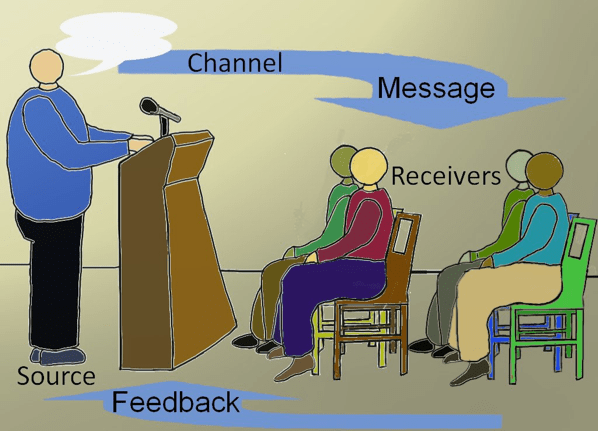
Frame of reference is how our point of view affects our understanding. It is a set of criteria or stated values in relation to which measurements or judgments can be made. It is also a structure of concepts, values, customs, views, etc., by means of which an individual or group perceives or evaluates data, communicates ideas, and regulates behavior. Each of us has a particular vantage point from which we see and understand events. How we see and understand events may depend on, prior knowledge, assumptions, values, language. Assumptions and values may also influence our perceptions. Frame of reference has a major impact on society. For example, the perspectives of the most powerful members of society have influenced our collected history. We approach the world and our relations to others within a certain temporal (affairs of the present life) context.
Inglorious Bastards that takes place during World War II. It is the first year of Germany’s occupation of France. Allied officer Lt. Aldo Raine (Brad Pitt) assembles a team of Jewish soldiers to commit violent acts of retribution against the Nazis, including the taking of their scalps. He and his men join forces with Bridget von Hammersmark, a German actress and undercover agent, to bring down the leaders of the Third Reich. Their fates converge with theater owner Shosanna Dreyfus, who seeks to avenge the Nazis’ execution of her family. You can make the connection between frame of reference and this movie because it is about the Nazis and Allies during World War II. This was a time in our history where your opinion and political stance determined where you stood during the war. Most people we shown how bad the Nazis were and the people of Germany were shown that Hitler and his army were the leaders that Germany needed after World War I.

References:
Helson, H. (1947). Adaptation-Level as Frame of Reference for Prediction of Psychophysical Data. The American Journal of Psychology, 60(1), 1-29. doi:10.2307/1417326
Postman, N. (1986). Amusing Ourselves to Death. New York: Penguin Books
Santander, A.A. (2020, February 17). Email Interview
Takaki, R.T. (2008). A Different Mirror: A History of Multicultural America. New York: Back Bay Books
Tarantino, Q. (Directior). (2009). Inglorious Bastards [Motion Picture]. United States: Universal Pictures
 Film Narrative #1