By, Lauren Allen
In Professor Ortiz’s Humanities 150 course we researched different lenses and began to try and implement them regarding specific social and historical issues. My group chose the social and historical issue of Film Narratives and I applied my lense of beliefs in order to re-imagine and understand the truth behind beliefs in film. In class we learned there are three main types of beliefs, first one being personal beliefs; opinions that all individuals hold about their environment and their place in their environment (Rokeach, 1968). The second type of beliefs are peripheral beliefs, these are usually unimportant and very easy to change, such as pizza is better than pasta. The last type is core beliefs, this form is usually fundamental that has been held for a long time and cannot be easily changed. People usually defend core beliefs against attack. When these beliefs change, normally so do many other ones. Although beliefs sound very personal, you can find beliefs in media, film and other forms of entertainment.

Eugene. (2018, August 17). The Big Six Studios Reach Agreement with Kodak to Keep Film Alive. Retrieved February 18, 2020.
To begin my post, I would like to talk about the film industry and some basics within creating cinematography. Directors usually have a major part in contributing to the characters personal beliefs and values. Without directly saying what a character believes in, a director shows you how they react in their environment and what role they play in their society. While doing some research on beliefs in film, I came across some very interesting information. I first found an ebook by Nils J. Nilsson called “Understanding beliefs”, in this book Nilsson explains that beliefs make up a majority of our knowledge because people have opinions about objects, culture, past and present issues. People often use beliefs to explain, predict, console, create and most importantly entertain. There are many different degrees of beliefs based upon the probability something is true. Nilsson says “all are products (with varying degrees of credibility) of fertile minds trying to find explanations for observed phenomena.” (Nilsson, pg.3) meaning, people use beliefs to justify truth whether it’s a proven fact or not, however they can easily be manipulated and changed based on scientific evidence or other factual causes. Similarly exposure to specific fictional narratives exert significant effects on attitudes and beliefs, while reading a scholarly article called “Changing Real‐World Beliefs With Controversial Movies: Processes and Mechanisms of Narrative Persuasion” by Juan-Jose Ignartua and Isabel Barrios they explain multiple studies done to show the impact of film narratives on a person’s beliefs. The first experiment was conducted in America, they had 107 participants watch the movie JFK directed by Oliver Stone. They interviewed the subjects before and after viewing the movie, overwhelmingly after the movie a majority of them believed to a greater extent that Cuban exiles, arms manufacturers, Pentagon officials, or the CIA and Lyndon Johnson took a decisive part in the matter, contrary to the official government version. They did this experiment with other controversial movies and everytime it seemed after watching the movie a person’s beliefs changed based upon what they thought initially on the topic. For the second experiment they had one group watch a specific Law and Order episode and the control group watch some alternate audio-visual content. Similar to the previous study, both groups were required to talk about their political views and ideology as well as fill out a questionnaire about controversial topics before and after viewing the episode or audio-visual content. Those who watched the Law and Order episode seemed to be more in favor of the death penalty compared to the control group, regardless if the person identified as a liberal or conservative. It seems that the viewing of a film narrative directly interferes with the production of a counter argument. Regardless of a scientific experiment, I felt my attitudes are easily changed as well after viewing a movie or show about a controversial topic.

Sneed, T. (2013). Your Guide to This Fall’s JFK Film and TV Specials. Retrieved February 18, 2020.
My group and I decided the best way to tackle this project about film narratives was to choose a war based movie and analyze it using our different lenses. We chose the movie Inglorious Basterds directed by Quentin Tarantino. The movie is based in Germany occupied France during the Nazi reign. It begins showing a dairy farming family in the rural part of France, S.S officer Hans Landa; a member of the Nazi party tries to find the last Jewish family of this area. Once uncovering that the family was hiding underneath the floorboards, they were all quickly executed except for the eldest daughter Shoushana Dreyfous who escaped. She later opened her own Cinema and went by a new name, Emmanuelle Mimieux. After meeting a high officer of the Nazi party, he quickly requested to have the cinema be rented out for a Nazi movie premiere. Agreeing, Shoushana soon planned on burning the cinema down in revenge on the execution of her family. She wasn’t the only one who loathed the Nazi party, the Basterds did whatever they could to destroy the Third Reich. The Basterds were a group of Jewish allies who’s goal was to kill every Nazi member and collect their scalps. Lt. Aldo Raine was the leader of the Basterds and committed violent acts of retribution against the Nazis. He gained forces with Briget Von Hammersmark, an undercover agent and actress to disthrown the Nazi party. I felt this movie was very interesting to analyze because of the dark history of the Holocaust and beliefs within. As most know the Holocaust began becasue of the beliefs of nationalism, antisemitism and ethnic cleansing. Although watching this movie didn’t change my inital views of the Holocaust it did give me a new perspective that the members of the Nazi party truly did believe that systematically killing millions of jews was the right thing to do for their country. For example, near the middle of the movie shortly after introducing the Basterds, they captured a Nazi soilder and he said he would rather die for his country then tell them where the other soilders were based. Another example of beliefs is how Shoushana would burn down her own cinema then let the Nazis live, all in act of revenge. The master narrative during World War II in Europe was in support of the genocide of Jewish people, it’s remarkable how much the master narrative has an impact on the people.

Inglourious Basterds. (2009). Retrieved February 18, 2020.
The master narrative portrayed in Ronald Takaki’s book, is based upon that the United States is a white country, although it’s made up of all immigrants, most not derived from Europe. “The Master Narrative’s narrow definition of who is an American reflects and reinforces a more general thinking that can be found in curriculum, news and entertainment media, business practices and public policies. Through this filter, interpretations of ourselves and the world has been constructed, leaving many of us feeling left out of history and America itself.” (Takaki, pg.5) Beliefs that America was founded by European settlers has shaped the United States today and continues to be strengthened by the argument that whites are more powerful. Beliefs about the American people are directly influenced by the use of media and television. “As the influence of print wanes, the content of policies, religion, education, and anything else that compromises public business must change and be recast in terms that are most suitable to television.” (Postman, pg.8) Neil Postman is quick to explain how telegraphy and photography strip information from its context, everything seen on television is twisted to entertain. It’s unfortunate how most are able to believe things heard in the media, often leading to shaping their personal beliefs.
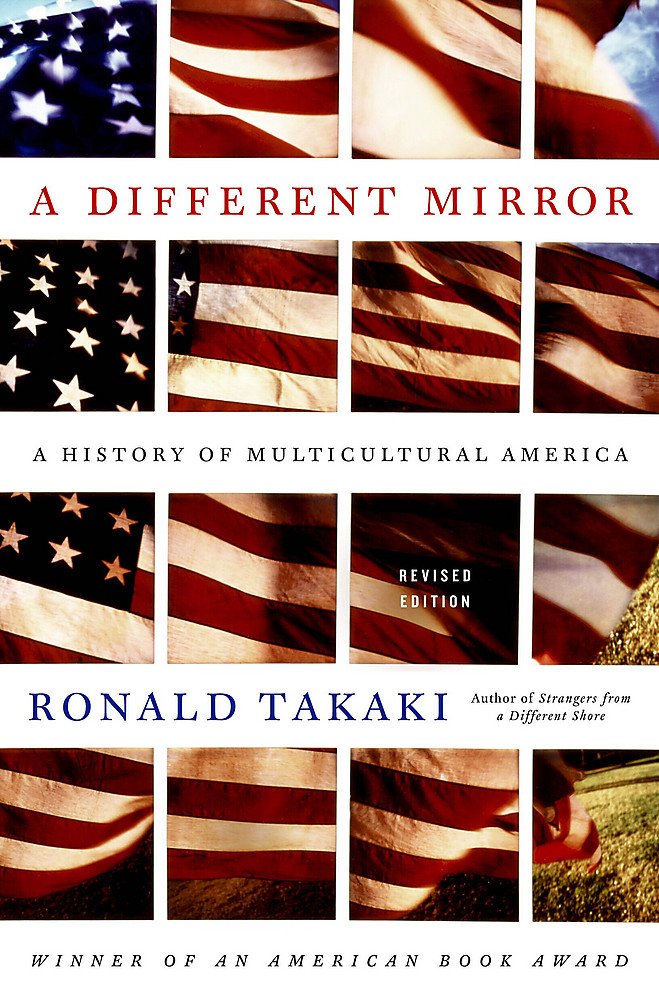
A Different Mirror: A History of Multicultural America, Ronald Takaki. (2018, April 12). Retrieved February 18, 2020.
For my groups community partner we reached out to a University of Washington professor and film lover, Ariadna A. Santander. I asked her two questions regarding my lens of beliefs; first question was when analyzing film, how big of an effect does the environment have on the characters? And my second question was how does someone’s place in their environment impact them (Ex. Class system, age, race, gender, etc.) in film? Professor Santander explained that a character’s environment plays a crucial role in storytelling, giving some examples of Citizen Kane and The Help. She mentioned that many films contain an element of foreshadowing or emancipation of stereotypes, helping prove the main idea of the plot.
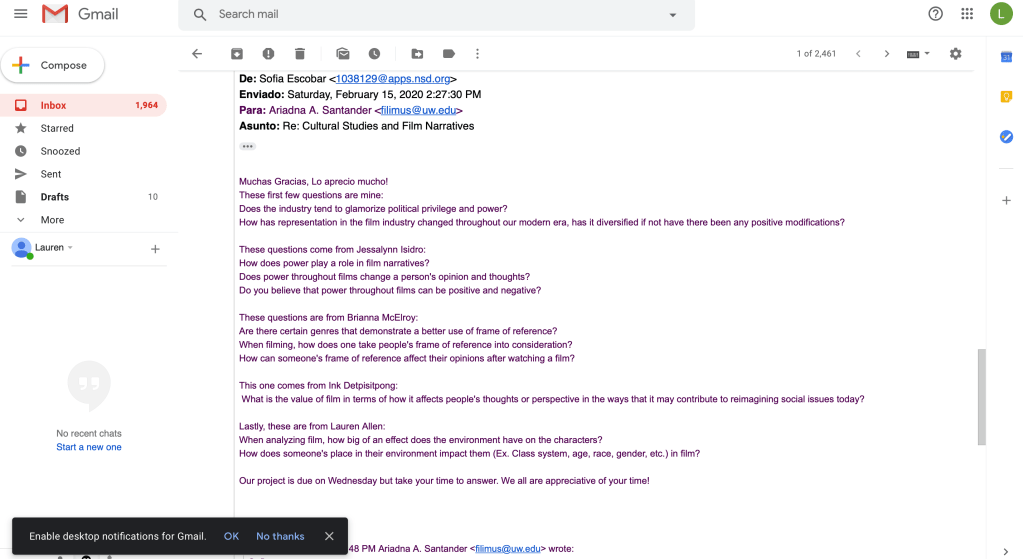
Santander, A.A. (2020, February 17). Email interview.
In conclusion, beliefs are everywhere. They shape everything we do and can be influenced greatly by what is seen throughout media and film narratives.
References
A Different Mirror: A History of Multicultural America, Ronald Takaki. (2018, April 12). Retrieved February 18, 2020.
Barrios, I., & Igartua, J. J. (2012). Changing Real‐World Beliefs With Controversial Movies: Processes and Mechanisms of Narrative Persuasion.
Eugene. (2018, August 17). The Big Six Studios Reach Agreement with Kodak to Keep Film Alive. Retrieved February 18, 2020.
Inglourious Bastards. (2009). Retrieved February 18, 2020.
Nilsson, N. J. (2014). Understanding beliefs. Cambridge, MA: MIT Press.
Postmann, N. (1986). Amusing ourselves to death. New York: Penguin Books.
Rokeach, Milton. (1968). Beliefs, attitudes, and values. San Francisco, CA: Jossey-Bass.
Santander, A.A. (2020, February 17). Email interview.
Sneed, T. (2013). Your Guide to This Fall’s JFK Film and TV Specials. Retrieved February 18, 2020.
Takaki, R. T. (2008). A different mirror: a history of multicultural America. New York: Back Bay Books.
Tarantino, Q. (Director). (2009). Inglorious Bastards [Motion Picture]. United States: Universal Pictures.
 Film Narrative #1